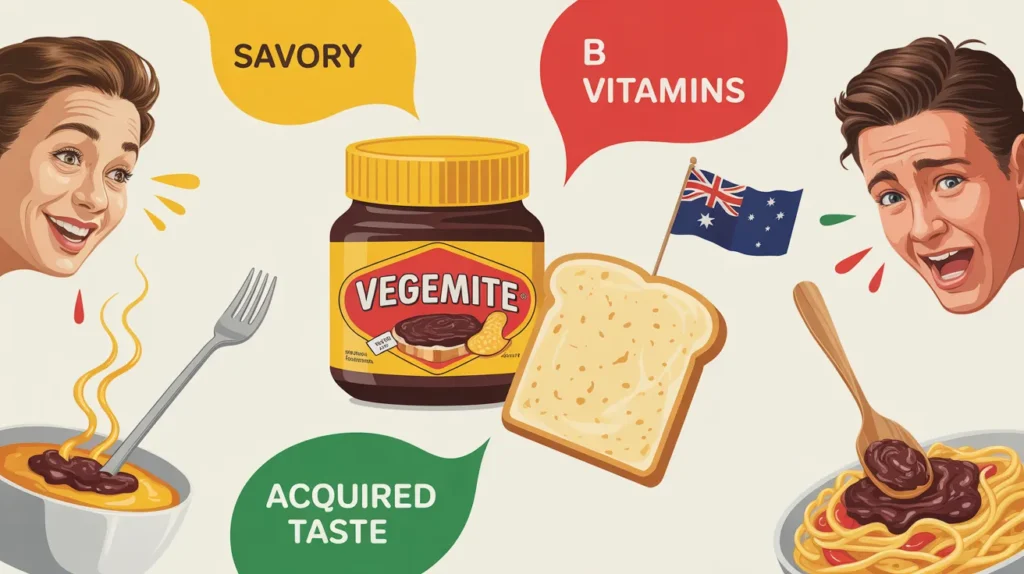
Vegemite is one of the most talked-about spreads in the world—and also one of the most misunderstood. People hear about it, see the reactions online, and immediately ask the same question: what does Vegemite taste like?
Some describe it as delicious comfort food. Others say it’s shockingly intense. The truth sits somewhere in between and depends heavily on how, why, and where it’s eaten.
This guide explains the flavor clearly, explores how Vegemite is actually used, and breaks down the cultural meanings, slang references, and common mistakes that confuse first-time tasters.
Definition & Core Meaning
Vegemite is a thick, dark brown Australian food spread made primarily from yeast extract, a by-product of beer brewing.
What Vegemite tastes like at its core
- Extremely savory (umami-rich)
- Very salty
- Slightly bitter
- Meaty, broth-like flavor
- Not sweet at all
People often describe the taste as:
- “Like concentrated soy sauce”
- “Salty vegetable stock”
- “Beef bouillon without the beef”
- “Strong umami paste”
Simple example reactions
- “I expected something sweet—this is intense.”
- “A tiny amount tastes amazing on buttered toast.”
- “It’s powerful, not meant to be eaten alone.”
Historical & Cultural Background
Vegemite was created in Australia in 1922 as a response to Marmite shortages after World War I. Australian chemist Dr. Cyril Callister developed it using leftover brewer’s yeast, turning waste into nourishment.
Cultural significance
- Became a national food symbol during WWII
- Promoted as a vitamin B powerhouse
- Common in Australian childhood diets
- Featured in school lunches for generations
Global interpretations
- Australia: Comfort food, nostalgic, normal
- UK: Compared to Marmite, but debated fiercely
- USA: Often seen as a novelty or challenge food
- Asia: Sometimes mistaken for chocolate spread
- Indigenous contexts: Adopted into modern food culture, not traditional cuisine
Vegemite isn’t just food—it’s a cultural marker of Australianness.
Emotional & Psychological Meaning
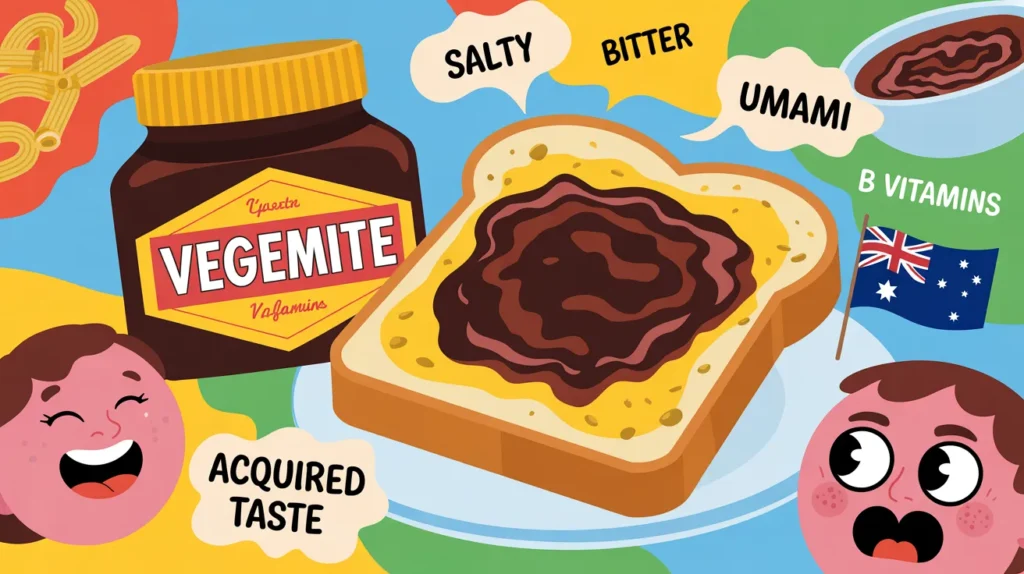
Vegemite’s taste experience often triggers strong emotional responses, which is rare for a single food.
Psychological layers
- Familiarity vs shock: Loved by those raised with it, rejected by newcomers
- Identity marker: Australians often bond over defending it
- Trust test: Friends offering Vegemite to visitors watch reactions closely
For many Australians, Vegemite equals:
- Home
- Childhood
- Simplicity
- Cultural pride
For outsiders, it can represent:
- Culinary bravery
- Cultural misunderstanding
- Humor and challenge
Different Contexts & Use Cases
Personal life
- Spread thinly on buttered toast
- Added to mashed potatoes
- Stirred into soups and stews
- Used as a seasoning, not a spread
Social media
- Viral “first time trying Vegemite” videos
- Reaction challenges
- Meme food representing “Australian toughness”
Relationships
- Often introduced jokingly to foreign partners
- A shared laugh or bonding moment
- Sometimes used as a playful prank (too much on toast)
Professional or modern usage
- Used by chefs to boost umami
- Added in tiny amounts to sauces
- Found in gourmet recipes worldwide
See also: What Does Umami Taste Like?
Hidden, Sensitive, or Misunderstood Meanings
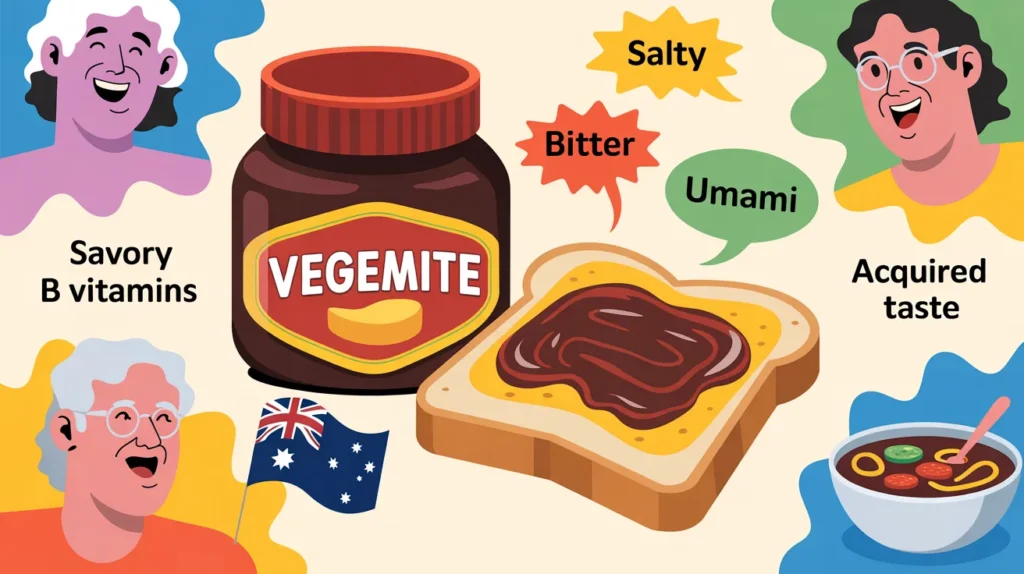
Vegemite is misunderstood more than almost any other spread.
Common misconceptions
- ❌ “It’s like Nutella”
- ❌ “You eat it thick like peanut butter”
- ❌ “It’s meant to be sweet”
What people get wrong
The biggest mistake is using too much. Vegemite is meant to be scraped on, not spread generously.
When meaning changes
- Thick layer = unpleasant bitterness
- Thin layer + butter = balanced, savory delight
- Cooking ingredient = deep umami enhancer
Comparison Section
| Spread / Food | Taste Profile | Key Difference |
|---|---|---|
| Vegemite | Salty, bitter, umami | Strongest yeast flavor |
| Marmite | Salty, slightly sweeter | Less bitter |
| Soy Sauce | Salty, umami | Liquid, fermented |
| Miso Paste | Savory, earthy | Less salty, smoother |
| Anchovy Paste | Salty, fishy | Fish-based |
Key Insight: Vegemite works best when treated like a seasoning, not a main flavor.
Popular Types / Variations
- Classic Vegemite – Original, bold, intense
- Vegemite & Cheese – Balanced, creamy, milder
- Vegemite Toast Soldiers – Childhood favorite
- Vegemite Pasta – Umami-boosted comfort food
- Vegemite Butter Blend – Smoother flavor
- Vegemite Crackers – Snack-friendly saltiness
- Vegemite Grilled Cheese – Savory depth
- Vegemite Soup Base – Broth-like enhancement
- Vegemite Avocado Toast – Modern café style
How to Respond When Someone Asks About It
Casual responses
- “It’s salty and savory—way stronger than it looks.”
- “Think umami, not sweet.”
Meaningful responses
- “It’s an acquired taste tied to Australian culture.”
- “It’s about balance, not quantity.”
Fun responses
- “Amazing if you respect it, awful if you don’t.”
- “It bites back if you underestimate it.”
Private responses
- “I didn’t like it at first, but now I crave it.”
Regional & Cultural Differences
Western countries
- Often treated as a novelty
- Compared unfairly to sweet spreads
Asian cultures
- Some familiarity due to umami flavors
- Often used in cooking rather than toast
Middle Eastern perspectives
- Comparable to salty pastes or broths
- Not traditionally spread-based diets
African & Latin regions
- Less exposure
- Taste often described as “too strong” initially
FAQs
Is Vegemite sweet?
No. It’s intensely savory and salty.
Why do people hate Vegemite?
Usually because they use too much or expect sweetness.
Is Vegemite healthy?
In small amounts, it’s rich in B vitamins.
Does Vegemite taste like Marmite?
Similar, but Vegemite is more bitter and intense.
Can Vegemite be used in cooking?
Yes, it’s excellent for adding umami depth.
Do Australians really love Vegemite?
Yes—many grow up eating it regularly.
Conclusion
So, what does Vegemite taste like? It’s bold, salty, deeply savory, and unapologetically intense. It’s not designed to please everyone instantly—but when used correctly, it delivers a flavor that’s uniquely satisfying.
Vegemite isn’t about indulgence. It’s about balance, culture, and respect for strong flavors. Whether you love it or hate it, understanding it properly changes the experience completely.
For many, Vegemite isn’t just food—it’s home on toast.