Walk into any pharmacy or health store, and you’ll see shelves full of probiotic supplements. Yogurt brands advertise “live cultures.” Social media influencers swear by gut health routines.
So what does probiotics do — really?
Are they just another health trend, or do they play a meaningful role in digestion, immunity, and overall wellness?
Here’s the clear answer: probiotics are beneficial bacteria that support your gut and help maintain balance inside your body. But their role goes much deeper than digestion alone.
Let’s break it down in plain English — backed by science and real-world understanding.
Definition & Core Meaning
Probiotics are live microorganisms — mostly beneficial bacteria and some yeasts — that provide health benefits when consumed in adequate amounts.
The term “probiotic” literally means “for life.”
Core Meaning in Simple Terms:
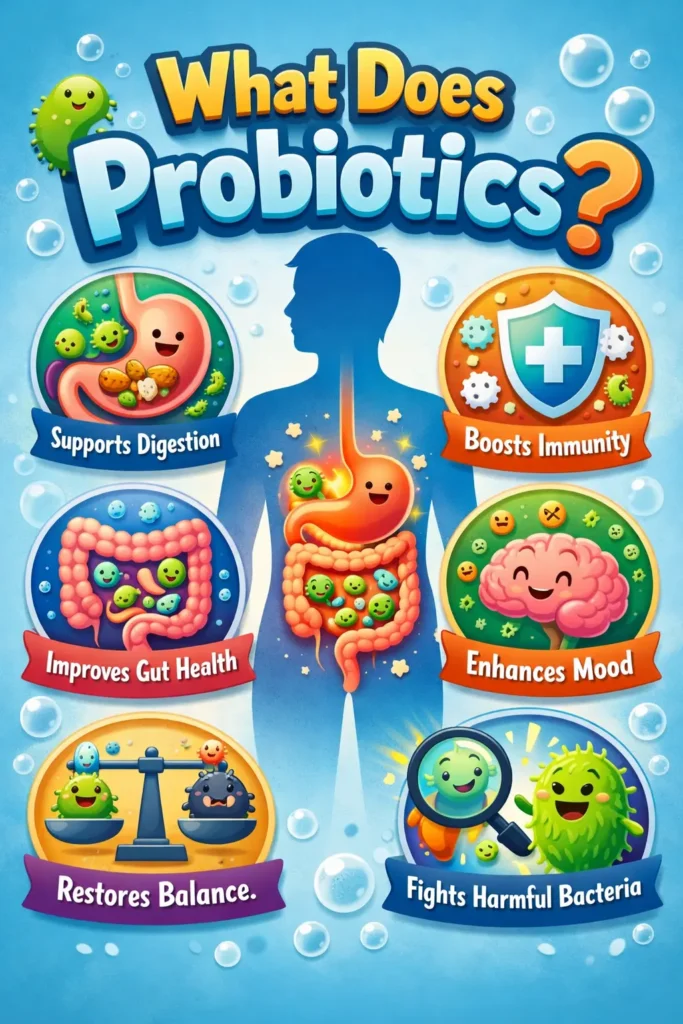
- They restore balance in your gut.
Your digestive system contains trillions of bacteria. Probiotics help keep the “good” and “bad” bacteria in balance. - They support digestion.
They help break down food and absorb nutrients. - They strengthen the immune system.
About 70% of your immune cells live in your gut. - They may improve mental well-being.
The gut-brain connection plays a powerful role in mood regulation.
Simple Example:
- “I started taking probiotics after antibiotics messed up my stomach.”
- “Eating yogurt with live cultures helps my digestion.”
That’s probiotics in action.
Historical & Cultural Background
Probiotics are not new. Humans have consumed beneficial bacteria for thousands of years.
Ancient Fermentation Practices
Long before capsules and supplements existed, cultures relied on fermented foods:
- Fermented milk in Central Asia
- Kimchi in Korea
- Sauerkraut in Europe
- Kefir in the Caucasus region
The scientific concept of probiotics gained recognition in the early 1900s through research at the Pasteur Institute, where scientists began studying how fermented dairy affected gut health.
Russian scientist Élie Metchnikoff proposed that fermented milk products containing beneficial bacteria could promote longevity. His ideas laid the groundwork for modern probiotic science.
Cultural Interpretations
- Western Medicine: Focuses on gut microbiome balance and disease prevention.
- Asian Traditions: Long valued fermented foods for digestion and energy.
- Indigenous Practices: Fermentation used for preservation and vitality.
- Middle Eastern Cultures: Yogurt-based diets linked to digestive comfort.
Probiotics aren’t a trend — they’re a rediscovered ancient practice.
Emotional & Psychological Meaning
Modern research reveals something fascinating: your gut and brain constantly communicate.
This is called the gut-brain axis.
When people ask what does probiotics do, they’re often surprised to learn:
- They may influence mood.
- They may help reduce anxiety symptoms.
- They can support stress resilience.
A healthy gut environment supports the production of neurotransmitters like serotonin. In fact, a large portion of serotonin is produced in the digestive tract.
So probiotics don’t just help you “feel better” physically — they may help you feel better emotionally too.
That’s why gut health is now linked to mental clarity, confidence, and even emotional stability.
Different Contexts & Use Cases
Probiotics show up in many areas of life.
1. Personal Health
- After antibiotics
- For bloating and gas
- For IBS symptoms
- For immune support
2. Social Media Trends
You’ll see phrases like:
- “Gut reset”
- “Healing your microbiome”
- “Daily probiotic routine”
While some trends exaggerate claims, probiotics do have legitimate benefits when used correctly.
3. Relationships & Lifestyle
Digestive discomfort affects confidence. When gut health improves:
- People feel lighter
- Energy levels rise
- Social comfort increases
4. Professional & Modern Usage
Doctors may recommend probiotics for:
- Antibiotic-associated diarrhea
- Certain digestive disorders
- Vaginal health balance
- Infant colic (in specific cases)
See also: What Does Prebiotic Mean?
Hidden, Sensitive, or Misunderstood Meanings
Many misconceptions surround probiotics.
❌ Myth 1: All probiotics are the same
Different strains do different things.
❌ Myth 2: More is always better
Higher doses don’t always mean better results.
❌ Myth 3: They cure everything
They support health — they are not miracle drugs.
❌ Myth 4: You need them forever
Some people benefit short-term; others long-term.
The effectiveness depends on:
- The strain
- The dose (CFUs)
- Your gut health
- Your diet
Balance matters more than hype.
Comparison Section
| Term | Meaning | Main Role | Found In |
|---|---|---|---|
| Probiotics | Live beneficial bacteria | Add good bacteria | Yogurt, supplements |
| Prebiotics | Fiber that feeds good bacteria | Nourish gut microbes | Garlic, onions, bananas |
| Synbiotics | Combination of probiotics & prebiotics | Add + feed bacteria | Specialized supplements |
| Antibiotics | Drugs that kill bacteria | Treat infections | Prescription medicine |
| Postbiotics | Byproducts of probiotics | Provide metabolic benefits | Emerging supplements |
Key Insight:
Probiotics add beneficial bacteria, while prebiotics feed them. Together, they support a healthier gut ecosystem.
Popular Types of Probiotics (10 Important Strains)
Not all probiotics are equal. Here are major types and what they do:
1. Lactobacillus acidophilus
Supports digestion and helps reduce lactose intolerance symptoms.
2. Bifidobacterium bifidum
Supports immune health and intestinal balance.
3. Lactobacillus rhamnosus
Commonly used for diarrhea prevention.
4. Saccharomyces boulardii
A beneficial yeast used for antibiotic-related digestive issues.
5. Lactobacillus plantarum
May reduce bloating and inflammation.
6. Bifidobacterium longum
Supports colon health and immune response.
7. Lactobacillus casei
Helps with digestive regularity.
8. Lactobacillus reuteri
Linked to oral and gut health.
9. Streptococcus thermophilus
Found in yogurt cultures; helps digest dairy.
10. Bacillus coagulans
Spore-forming probiotic with strong shelf stability.
Each strain has specific functions — that’s why reading supplement labels matters.
How to Respond When Someone Asks “What Does Probiotics Do?”
Here are different ways to answer depending on the situation:
Casual Response
“It helps balance the good bacteria in your gut.”
Meaningful Response
“Probiotics support digestion, immunity, and even mental health through the gut-brain connection.”
Fun Response
“It’s like hiring good bacteria to clean up your stomach.”
Private or Personal Response
“They really helped after my antibiotics messed up my digestion.”
Choose the tone that fits the moment.
Regional & Cultural Differences
Western Countries
Focus on capsules, supplements, and scientific strain studies.
Asian Countries
Heavy reliance on fermented foods like kimchi and miso.
Middle Eastern Regions
Daily yogurt consumption provides natural probiotic benefits.
African & Latin American Traditions
Fermented grains and dairy products used traditionally for gut comfort.
Across cultures, probiotics are consumed through food — not just pills.
FAQs About What Probiotics Do
1. What does probiotics do for your stomach?
They help restore balance between good and bad bacteria, reducing bloating and digestive discomfort.
2. Do probiotics help immunity?
Yes. Since much of the immune system resides in the gut, probiotics can support immune defenses.
3. Can probiotics help with anxiety?
Research suggests certain strains may support mood through the gut-brain axis.
4. How long does it take for probiotics to work?
Some people notice changes within a few days; others may take weeks.
5. Should everyone take probiotics?
Not necessarily. Many people get enough from fermented foods.
6. Can probiotics cause side effects?
Mild gas or bloating may occur initially but usually resolves.
7. Are probiotics safe?
For most healthy individuals, yes. People with compromised immune systems should consult a healthcare provider.
Conclusion
So, what does probiotics do?
They support gut balance, improve digestion, strengthen immunity, and may even influence mood. Their benefits depend on the strain, dosage, and your individual health.
Probiotics aren’t magic pills — they’re living microorganisms that work best when paired with a balanced diet and healthy lifestyle.
Across ancient cultures and modern science, one truth remains consistent: gut health matters.
When your gut thrives, your body and mind often follow.