You’ve heard words like buzz, bang, click, or sizzle and instantly imagined the sound they describe. That instant connection between word and sound is exactly why people search for what does onomatopoeia mean.
Onomatopoeia shows up everywhere—books, comics, everyday speech, social media captions, even slang. It makes language feel alive, expressive, and human. Understanding it helps with writing, communication, humor, and even emotional expression.
This guide breaks down the meaning, history, psychology, real-life usage, slang forms, and cultural differences of onomatopoeia—clearly, naturally, and in a way that actually sticks.
Definition & Core Meaning
Onomatopoeia is a figure of speech where a word imitates or suggests the sound it represents.
In simple terms, the word sounds like what it describes.
Core meanings of onomatopoeia:
- A word that copies a real sound
- A term that mimics noise through pronunciation
- A sound-based word that creates sensory impact
Simple examples:
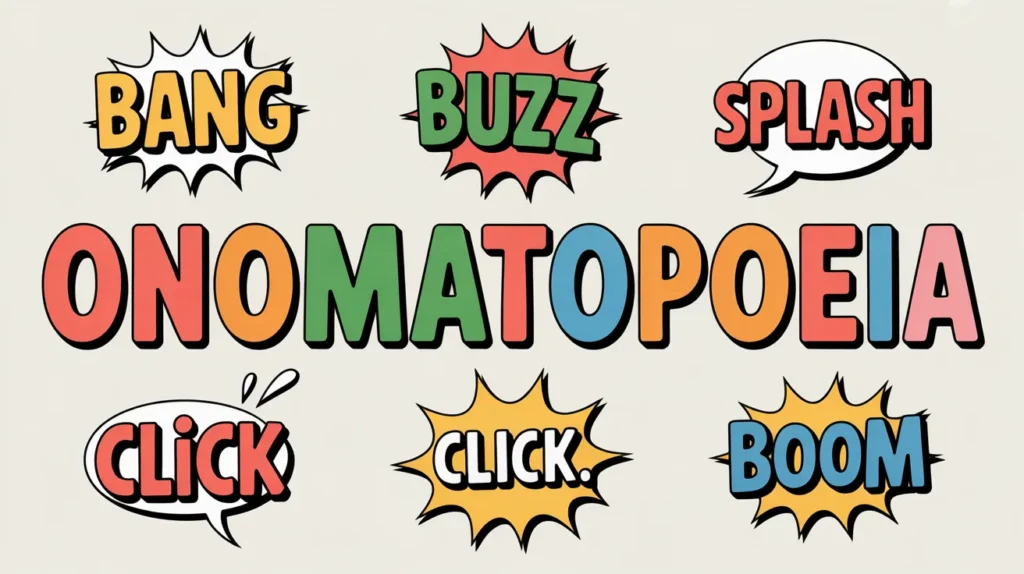
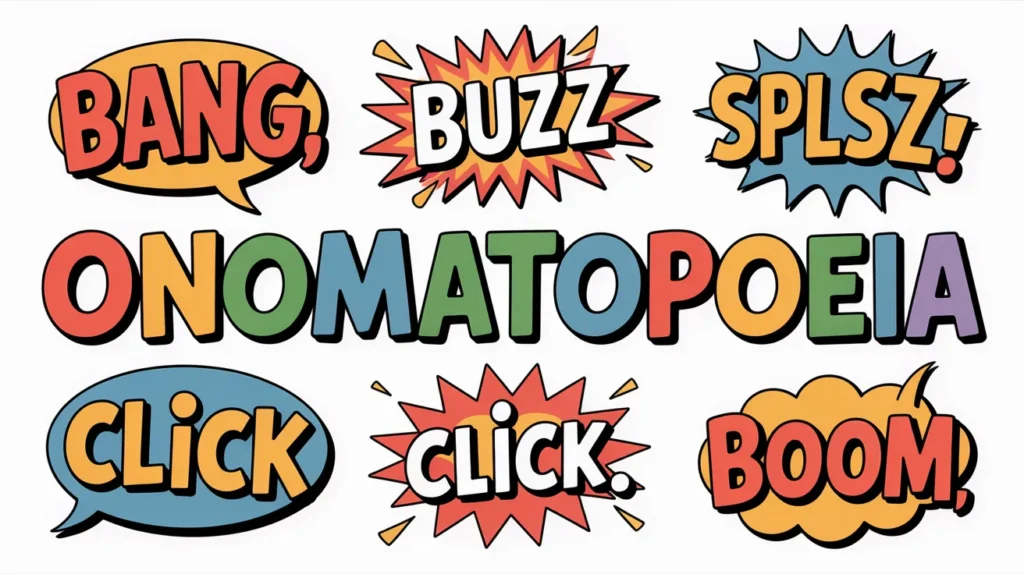
- “Buzz” — the sound of a bee
- “Bang” — a loud explosion
- “Splash” — water hitting a surface
- “Tick-tock” — a clock’s movement
These words don’t just describe sound—they recreate it in your mind.
Historical & Cultural Background
Onomatopoeia is one of the oldest tools in human language.
Ancient roots
Early humans relied heavily on sound imitation before formal language developed. Mimicking animal noises, environmental sounds, and natural forces helped communities communicate quickly and effectively.
Ancient Greek scholars later gave the concept its name:
- Onoma = name
- Poiein = to make
Literally: “to make a name (from sound)”
Cultural interpretations
- Western traditions used onomatopoeia heavily in poetry, storytelling, and later comics.
- Asian languages (especially Japanese and Korean) expanded it into entire grammatical systems.
- Indigenous cultures used sound-based words in oral storytelling to preserve history and nature.
- African and Latin American folklore often blends rhythm, sound, and repetition as memory tools.
Onomatopoeia survived every era because it speaks to the senses—not just the intellect.
Emotional & Psychological Meaning
Onomatopoeia isn’t just linguistic—it’s psychological.
Why it feels powerful
- Activates auditory imagination
- Creates emotional immediacy
- Triggers memory faster than abstract words
Emotional impact examples:
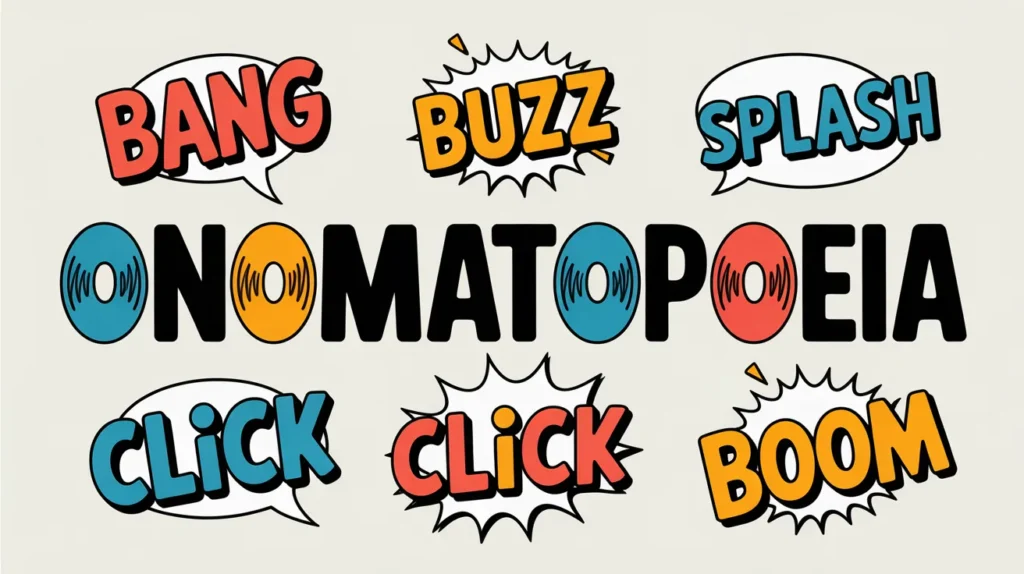
- “Boom” feels sudden and intense
- “Whisper” feels gentle and intimate
- “Crash” signals chaos or loss
In therapy, storytelling, and creative writing, sound-based words help express emotions that are hard to explain logically. They reconnect people with instinctive, sensory understanding.
On a deeper level, onomatopoeia reflects how humans experience the world first through sound—even before sight or speech.
Different Contexts & Use Cases
Personal life
People use onomatopoeia casually:
- “My phone went buzz all night.”
- “I heard a thud upstairs.”
It keeps conversations vivid and relatable.
Social media
On platforms like Instagram, TikTok, and X:
- “That coffee was sip-sip good ☕”
- “Brain went pop after that plot twist”
Sound words add personality and humor.
Relationships
Onomatopoeia softens communication:
- “My heart went thump when I saw you.”
- “That comment was a real ouch.”
It expresses emotion without overexplaining.
Professional or modern usage
- Advertising: “Snap. Crackle. Pop.”
- UX writing: “Click here”
- Branding: memorable, sensory language
Sound-based words make messages stick.
Hidden, Sensitive, or Misunderstood Meanings
Common misconceptions
- Onomatopoeia isn’t random sound-making—it follows linguistic rules.
- Not all sound-related words qualify. “Loud” describes sound but doesn’t imitate it.
Cultural misunderstandings
Different languages represent the same sound differently:
- English dog: “woof”
- Japanese dog: “wan-wan”
- Spanish dog: “guau”
The sound is universal; the interpretation isn’t.
When meaning changes
In slang or digital spaces, onomatopoeia can shift meaning:
- “Boom” can mean success
- “Hmm” can signal doubt or sarcasm
Context determines interpretation.
Comparison: Onomatopoeia vs Similar Concepts
| Concept | What It Is | Example | Difference |
|---|---|---|---|
| Onomatopoeia | Word imitates sound | “Bang” | Direct sound imitation |
| Alliteration | Repeated consonants | “Soft silky sound” | Focuses on rhythm |
| Interjection | Emotional expression | “Wow!” | Emotion-based, not sound-based |
| Imagery | Sensory description | “The loud explosion” | Descriptive, not imitative |
Key Insight: Onomatopoeia stands out because it recreates sound rather than describing it.
Popular Types & Variations of Onomatopoeia
- Animal sounds – meow, moo, hiss
- Impact sounds – bang, thud, crash
- Water sounds – splash, drip, gush
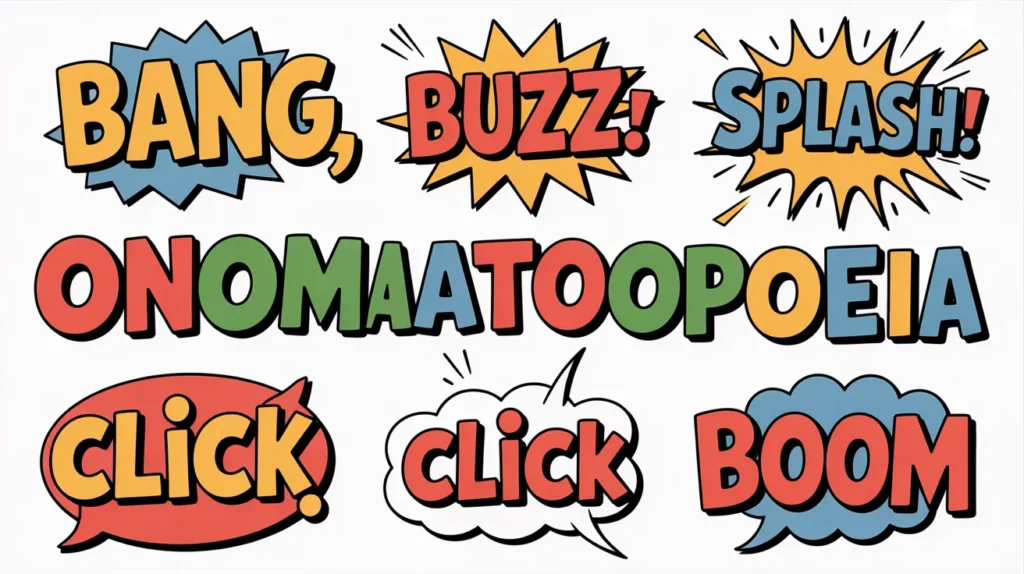
- Mechanical sounds – click, whirr, beep
- Human sounds – cough, sigh, giggle
- Nature sounds – rustle, thunder, crackle
- Comic-style sounds – pow, zap, bam
- Digital slang sounds – ping, tap, swipe
- Emotional reactions – ugh, hmm, ahh
Each type adds realism and emotional texture to communication.
How to Respond When Someone Asks About Onomatopoeia
Casual response
“It’s when a word sounds like the noise it describes—like buzz or bang.”
Meaningful response
“It’s language copying real sounds so we feel the moment instead of just reading it.”
Fun response
“It’s basically words doing sound effects.”
Private or academic response
“Onomatopoeia is a linguistic device where phonetics mirror natural sounds, enhancing sensory perception.”
Regional & Cultural Differences
Western usage
Mostly limited to literature, comics, and casual speech.
Asian languages
Japanese uses thousands of sound-symbolic words:
- Dokidoki (heartbeat)
- Kirakira (sparkling)
They describe emotions, textures, and states—not just sounds.
Middle Eastern languages
Arabic poetry uses sound imitation for rhythm and emphasis, especially in oral traditions.
African & Latin cultures
Heavy use in music, storytelling, and folklore to preserve memory and emotion.
Onomatopoeia adapts to culture while staying universally human.
FAQs
What does onomatopoeia mean in simple words?
A word that sounds like what it describes.
Is onomatopoeia only used in writing?
No, it’s common in speech, media, and digital communication.
Are slang words considered onomatopoeia?
Some are, especially when they imitate sounds like ping or buzz.
Why is onomatopoeia important?
It makes language vivid, emotional, and easier to understand.
Is onomatopoeia the same in every language?
No, sound interpretations vary by culture and language.
Can onomatopoeia describe feelings?
Yes—sounds like ugh or ahh express emotion directly.
See also: What Does Figurative Language Mean
Conclusion
\So, what does onomatopoeia mean at its core? It’s language at its most human—words shaped by sound, emotion, and instinct.
From ancient storytelling to modern slang, onomatopoeia helps people feel moments instead of just understanding them. It bridges logic and emotion, making communication richer, warmer, and more memorable.
Once you notice it, you’ll hear it everywhere—because sound is how language first came alive.