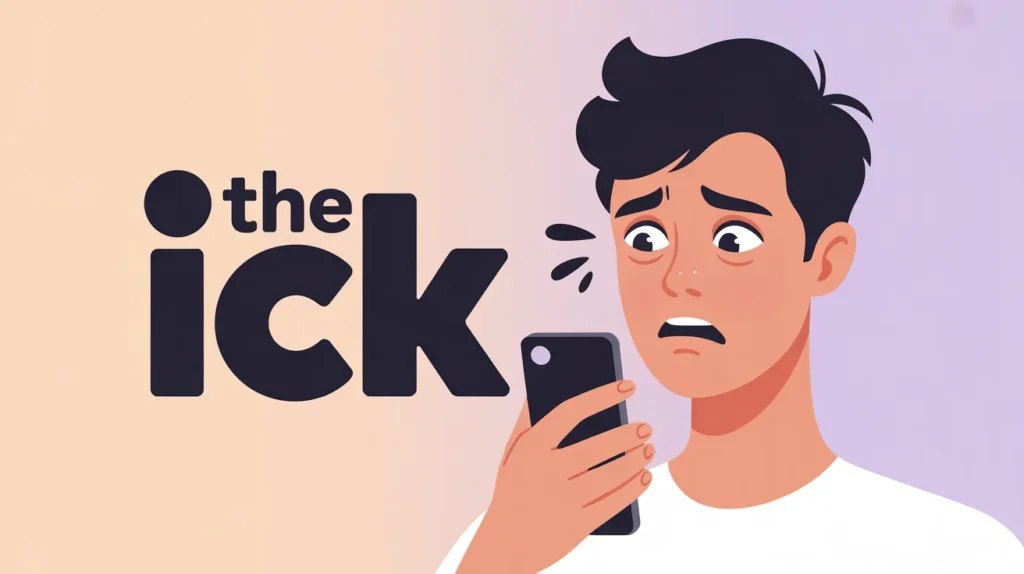
You’ve probably seen someone say, “That gave me the ick,” especially on TikTok, Instagram, or dating apps. The word sounds simple, almost childish, yet it carries a surprisingly powerful meaning.
People search for what does ick mean because it shows up everywhere—dating conversations, memes, relationship advice, and pop culture debates. It’s often used casually, but it can end attraction instantly.
This guide breaks down the real meaning of “ick,” where it came from, how people use it today, and why it matters emotionally and socially.
Definition & Core Meaning
What Does “Ick” Mean?
Ick is a slang term used to describe a sudden feeling of disgust, discomfort, or emotional turn-off toward a person—usually someone you were previously attracted to.
Core Meanings
- A sudden loss of attraction
- An unexplainable feeling of cringe
- A moment where someone’s behavior feels off
- A gut reaction rather than a logical decision
Simple Examples
- “He yelled at the waiter and I instantly got the ick.”
- “Watching her baby-talk her dog gave me the ick.”
- “I liked him until he started flexing in every mirror.”
The key idea: the ick is emotional, fast, and hard to reverse.
Historical & Cultural Background
Early Origins of “Ick”
The word ick itself is not new. It has existed for centuries as an informal expression of disgust, similar to “ew” or “yuck.” Linguists trace it back to early English onomatopoeia—sounds meant to imitate physical reactions.
However, the modern slang meaning evolved much later.
Rise in Popular Culture
- Popularized by British dating shows in the early 2000s
- Entered mainstream dating language through TV, blogs, and podcasts
- Exploded globally via TikTok and Gen Z slang after 2020
Cultural Interpretations
- Western cultures: Often tied to dating, attraction, and boundaries
- Asian cultures: Similar feelings exist but are described more indirectly
- Indigenous and traditional societies: Attraction loss is framed through respect, harmony, or character rather than slang
The term “ick” became popular because it captures a complex emotional response in just one word.
Emotional & Psychological Meaning
The ick isn’t just about being judgmental—it’s psychological.
Why the Ick Happens
- Mismatch in values
- Violation of personal boundaries
- Subconscious instincts
- Loss of perceived confidence or maturity
Psychological Perspective
From a behavioral psychology standpoint, the ick is often linked to:
- Attachment styles
- Evolutionary mate selection
- Emotional safety signals
Your brain notices something it interprets as unattractive or unsafe, even if you can’t explain why.
Personal Growth Angle
Experiencing the ick can help people:
- Understand their boundaries
- Learn what truly matters to them
- Recognize emotional triggers
It’s less about being “mean” and more about self-awareness.
Different Contexts & Use Cases
Personal Life
Friends often use “ick” casually:
- “I got the ick when he never asked questions.”
- “Her negativity gave me the ick.”
It’s a shorthand for emotional discomfort.
Social Media
On TikTok and Instagram, “icks” are often exaggerated for humor:
- “Men who clap when the plane lands = ick”
- “Calling it ‘doggo’ = instant ick”
These are often playful, not serious dealbreakers.
Relationships & Dating
In dating, the ick can be powerful:
- Can end attraction instantly
- Often irreversible
- May signal deeper incompatibility
Professional or Modern Usage
While not common in formal settings, people might jokingly say:
- “That presentation font gave me the ick.”
It’s informal, expressive, and modern.
Hidden, Sensitive, or Misunderstood Meanings
Common Misunderstandings
- ❌ The ick is not always logical
- ❌ It doesn’t mean someone is a bad person
- ❌ It’s not always permanent
When Meaning Changes
Sometimes, “ick” is used jokingly rather than seriously. Context matters.
- Serious ick → emotional dealbreaker
- Playful ick → mild annoyance
Cultural Misinterpretations
In some cultures, openly expressing disgust toward behavior can seem rude. What’s considered an “ick” in one culture may be normal in another.
Comparison Section
| Term | Meaning | How It Differs From “Ick” |
|---|---|---|
| Turn-off | Loss of attraction | More logical and gradual |
| Cringe | Embarrassing reaction | Often secondhand |
| Red flag | Warning sign | Suggests future risk |
| Pet peeve | Minor annoyance | Not attraction-based |
| Dealbreaker | Non-negotiable issue | More deliberate |
Key Insight:
The ick is unique because it’s instant, emotional, and often subconscious.
Popular Types / Variations of the “Ick”
- The Behavior Ick
Triggered by rude or awkward actions. - The Confidence Ick
When someone appears insecure or overly performative. - The Hygiene Ick
Poor grooming or cleanliness. - The Social Media Ick
Oversharing, thirst traps, or constant validation-seeking. - The Voice Ick
Sudden irritation with someone’s tone or way of speaking. - The Humor Ick
Jokes that feel immature or offensive. - The Texting Ick
Overuse of emojis, poor grammar, or constant messaging. - The Entitlement Ick
Disrespect toward service workers or friends. - The Lifestyle Ick
Clashing habits, routines, or priorities. - The Energy Ick
When someone’s vibe feels draining or negative.
How to Respond When Someone Asks About It
Casual Responses
- “It’s just a sudden turn-off.”
- “You know when something feels off instantly?”
Meaningful Responses
- “It’s your intuition reacting to incompatibility.”
- “It’s often about boundaries and values.”
Fun Responses
- “It’s attraction’s off-switch.”
- “Romantic nausea—but emotionally.”
Private Responses
- “It’s personal and hard to explain.”
- “It depends on the situation and person.”
Regional & Cultural Differences
Western Cultures
- Common slang in dating
- Openly discussed online
- Often humorous
Asian Cultures
- Similar feelings expressed indirectly
- Focus on harmony and respect
- Less slang-based
Middle Eastern Cultures
- Attraction discussed more privately
- Behavior-based judgments are subtle
- Slang varies by region
African & Latin Cultures
- Strong emphasis on respect and energy
- Feelings similar to the ick exist
- Expressed through tone and social cues
Frequently Asked Questions (FAQs)
Is the ick always a bad thing?
No. It can be a healthy signal that something isn’t right for you.
Can the ick go away?
Sometimes. If it’s minor or stress-related, attraction can return.
Is the ick shallow?
Not always. It often reflects deeper emotional needs.
Is “ick” only about dating?
Mostly, but it can apply to friendships, habits, or situations.
Why is the ick so common now?
Social media normalized talking about attraction openly.
Is getting the ick normal?
Yes. Most people experience it at some point.
Can you cause the ick unintentionally?
Absolutely. It’s often unplanned and subconscious.
Conclusion
So, what does ick mean really come down to? It’s a fast, emotional signal—your intuition telling you something feels wrong, uncomfortable, or incompatible.
The ick isn’t about being cruel or picky. It’s about understanding attraction, boundaries, and emotional alignment. In a world where dating and communication move fast, having a word for that sudden feeling helps people express themselves honestly.
Whether you see it as funny, frustrating, or insightful, the ick reflects how deeply human attraction really is.
See also: What Does “Red Flag” Mean in Dating?