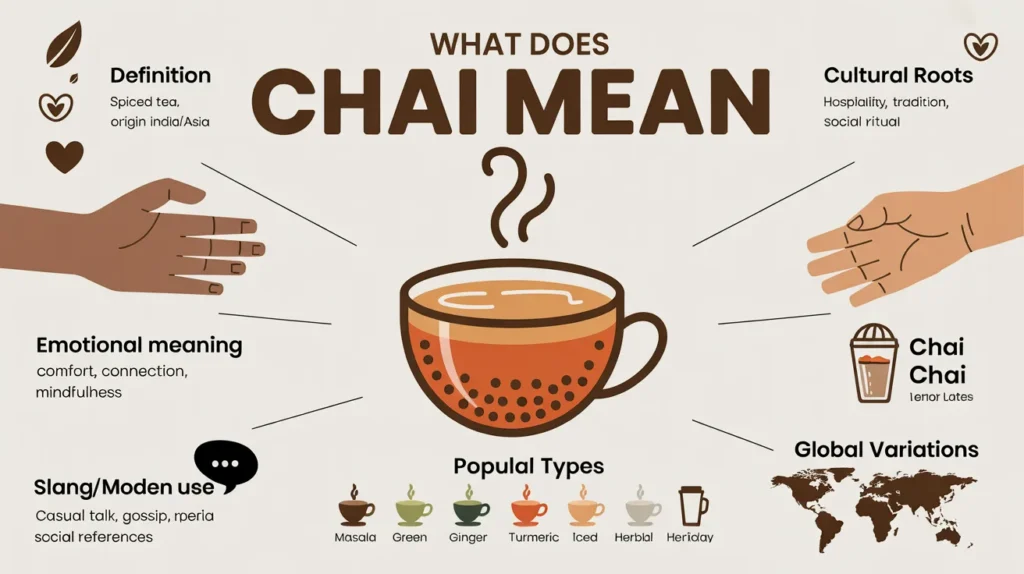
Chai is more than just a drink. Across the globe, it carries cultural, emotional, and even social weight. Whether you’re sipping it in a bustling café or hearing it referenced online, many wonder: what does chai truly mean?
People search for this term to understand its origins, usage, and the subtle differences in meaning across cultures. This guide explores everything from definitions to slang usage, giving you clarity whether you’re a tea enthusiast or a curious learner.
By the end, you’ll understand chai from multiple angles: historical, cultural, emotional, and even playful modern interpretations.
Definition & Core Meaning
At its simplest, chai refers to a spiced or flavored tea. However, its meaning can vary based on language, culture, and context. Here’s a clear breakdown:
- Literal Definition
- Chai = tea (originates from the Hindi word for tea, derived from Chinese “cha”)
- Example: “I’m making a cup of chai before work.”
- Cultural Connotation
- Warmth, hospitality, and comfort
- Example: “Let’s have some chai and talk.”
- Modern Slang / Social Meaning
- Sometimes used metaphorically to signify gossip or casual conversation, especially online
- Example: “Spilling the chai about last night’s party.”
- Symbolic Meaning
- Friendship, community, or a slow, mindful moment
- Example: “Sharing chai with family is my favorite part of the day.”
Historical & Cultural Background
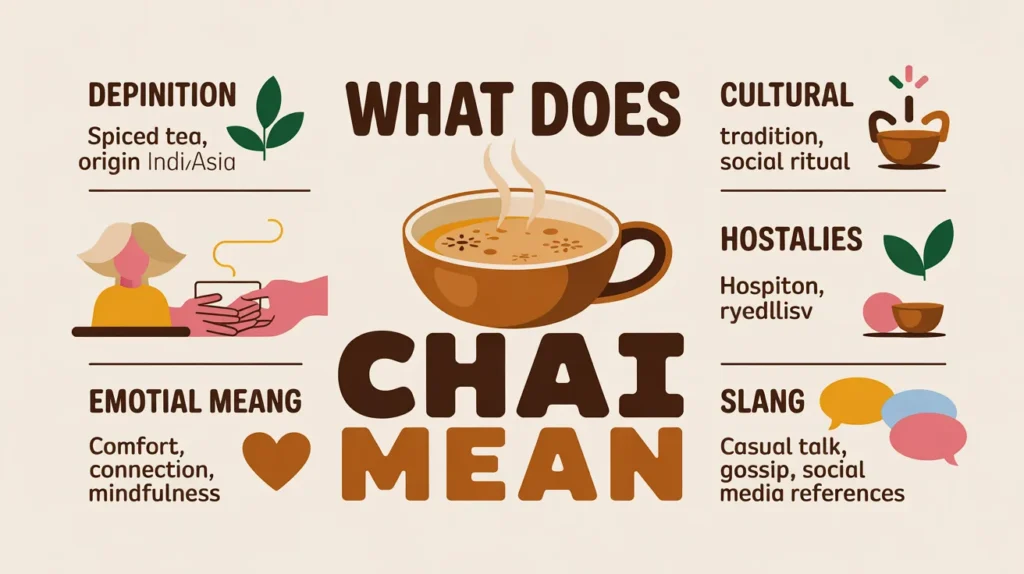
Ancient Origins
Chai traces its roots to ancient China, where the word “cha” simply meant tea. Trade along the Silk Road brought tea to India, where locals began infusing it with spices like cardamom, cinnamon, ginger, and cloves.
Indian Tradition
In India, chai became a daily ritual. Street vendors, called chaiwalas, serve masala chai to millions daily. The drink symbolizes hospitality, warmth, and social bonding.
Western Interpretation
In the West, “chai” often specifically refers to masala chai, a spiced tea version. Cafés market it as a cozy, aromatic beverage, highlighting its exotic roots.
Broader Cultural Influence
- Middle East & Africa: Tea culture influenced by Indian migration; spices vary
- Western Pop Culture: Chai is associated with wellness, mindfulness, and café culture
Emotional & Psychological Meaning
Chai is more than flavor—it evokes feelings and mental states:
- Comfort & Warmth: Drinking chai is often linked to relaxation and stress relief.
- Connection & Community: Sharing chai fosters friendship, conversation, and bonding.
- Mindfulness: Ritualistic preparation encourages slowing down and being present.
- Identity: For many, chai is a cultural anchor, a way to connect with heritage.
Example: “Every evening, I sip chai alone and feel grounded—it’s my little pause from the world.”
Different Contexts & Use Cases
Chai appears in various scenarios beyond the cup:
- Personal Life
- Morning ritual or relaxation beverage
- Example: “I start every day with a cup of chai and a book.”
- Social Media
- Hashtags like #ChaiTime or #ChaiLovers celebrate the drink
- Slang usage: gossip or “tea spilling” scenarios
- Relationships
- Sharing chai as a bonding activity
- Example: “We bonded over chai on our first date.”
- Professional / Modern Usage
- Cafés, startups, and coworking spaces often offer “chai breaks”
- Example: “We schedule a chai break to recharge the team.”
Hidden, Sensitive, or Misunderstood Meanings
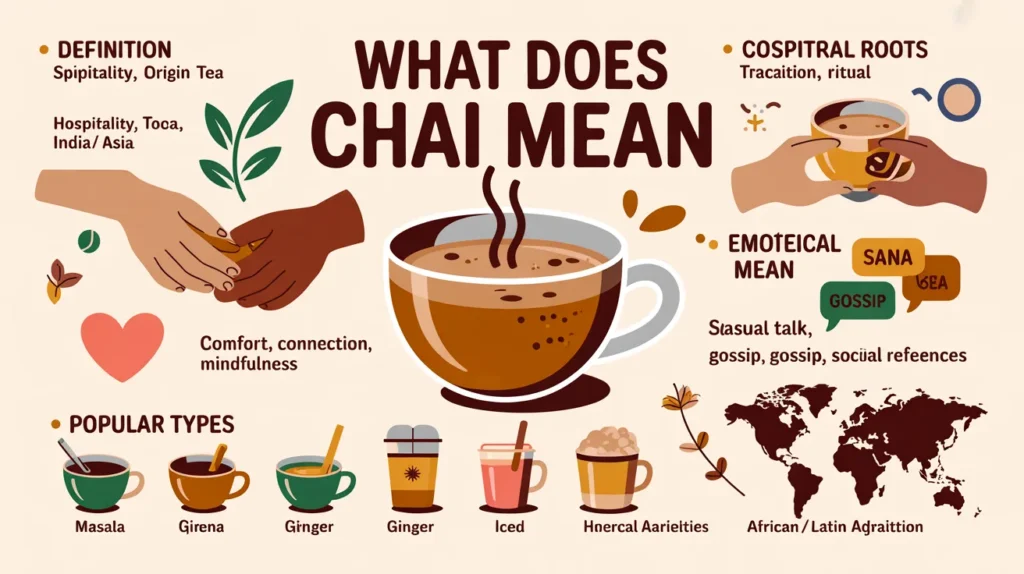
- Misinterpretation
- Some confuse “chai” with “chai latte,” which is a Western café invention. Traditional chai is stronger, spiced, and often sweetened with sugar.
- Cultural Sensitivity
- Using chai as a marketing gimmick can dilute its cultural significance.
- Slang Confusion
- Online, “chai” can mean gossip or rumors. Misunderstanding this may lead to awkward social situations.
Comparison Table: Chai vs Similar Terms
| Term | Origin | Meaning | Common Usage |
|---|---|---|---|
| Chai | India / Asia | Spiced tea / social bonding | Daily rituals, café culture |
| Tea | Global | Plain or flavored beverage | Breakfast, general drink |
| Chai Latte | Western cafes | Milk-based spiced tea | Café menus, specialty drinks |
| Bubble Tea | Taiwan | Sweet tea with tapioca pearls | Snack culture, young audiences |
| Herbal Infusion | Global | Non-caffeinated drink, herbal | Wellness, relaxation |
Key Insight: Chai carries both literal and emotional weight that extends beyond just tea, unlike similar beverages.
Popular Types / Variations of Chai
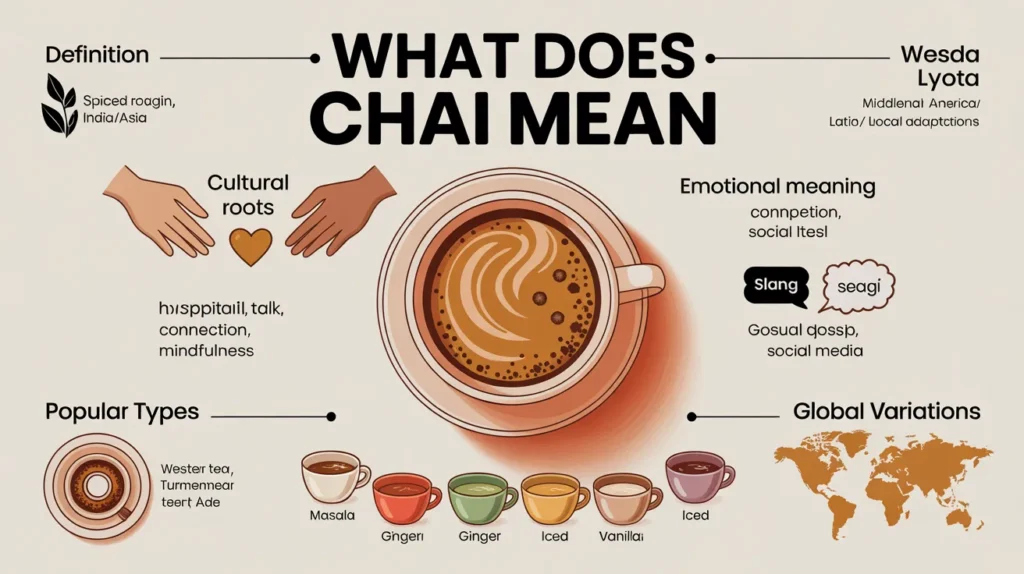
- Masala Chai – Traditional Indian spiced tea with cardamom, cinnamon, and ginger.
- Green Chai – Uses green tea leaves, lighter flavor, antioxidant-rich.
- Ginger Chai – Focuses on ginger, great for digestion and warmth.
- Cardamom Chai – Fragrant, sweet-spicy, often used in Indian households.
- Turmeric Chai – Golden chai, anti-inflammatory properties.
- Vanilla Chai – Smooth, sweet, popular in Western cafés.
- Iced Chai – Chilled version, refreshing in hot climates.
- Oat Milk / Almond Chai – Dairy-free options, modern adaptations.
- Spiced Black Chai – Strong black tea with classic spices.
- Rooibos Chai – Caffeine-free, red herbal tea base.
How to Respond When Someone Asks About Chai
- Casual Response: “It’s basically spiced tea—really comforting!”
- Meaningful Response: “Chai is more than tea; it’s about warmth, connection, and culture.”
- Fun Response: “Chai? It’s liquid happiness in a cup!”
- Private Response: “I make it a personal ritual—spices, milk, and a moment for myself.”
Regional & Cultural Differences
- Western Countries: Focus on sweet, milk-heavy chai lattes. Often marketed as a wellness drink.
- India / South Asia: Traditional masala chai, strong, sweet, spiced, part of daily life.
- Middle East: Tea culture blends Indian spices with local flavors.
- Africa / Latin America: Adapted spices; chai less ritualized, more beverage-oriented.
FAQs About Chai
1. Is chai the same as tea?
- Chai literally means tea, but traditionally refers to spiced tea in South Asia.
2. What is masala chai?
- A type of chai made with black tea, milk, sugar, and a mix of spices like cardamom, ginger, and cinnamon.
3. Can chai be caffeine-free?
- Yes, herbal or rooibos chai contains no caffeine.
4. Why is chai so popular globally?
- Its unique blend of spices, cultural significance, and comforting flavor make it universally appealing.
5. Is chai used as slang?
- Online, “chai” can mean gossip or casual talk, especially in social media contexts.
6. How is chai prepared traditionally?
- Boil water, add tea leaves and spices, simmer, add milk and sugar, then strain.
7. Can chai be healthy?
- Spices like ginger, cardamom, and turmeric have anti-inflammatory and antioxidant properties.
Conclusion
Chai is far more than a drink. Its meanings range from literal tea to emotional comfort, cultural identity, and even playful slang. Understanding chai gives insight into centuries of tradition, daily rituals, and global connections.
Next time you sip a warm cup, remember: chai is a bridge between cultures, a moment of mindfulness, and a symbol of hospitality and connection.