Ever wondered what people mean when they say “20/20 vision”? It’s a phrase we hear often, from eye exams to casual conversations about clarity and perception. But what does it actually signify?
People search for this phrase not just for medical curiosity, but also because it has metaphorical and everyday uses. Understanding it helps you grasp both literal vision standards and its figurative meaning in life, clarity, and insight.
By the end, you’ll know the precise definition of 20/20 vision, how it’s used medically and socially, slang variations, and even how to explain it to others naturally.
Definition & Core Meaning
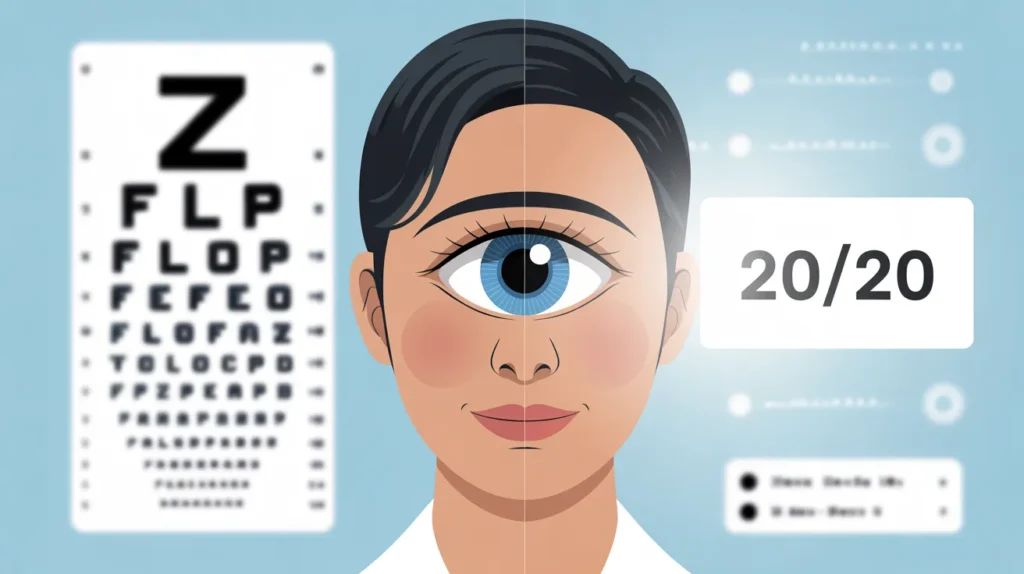
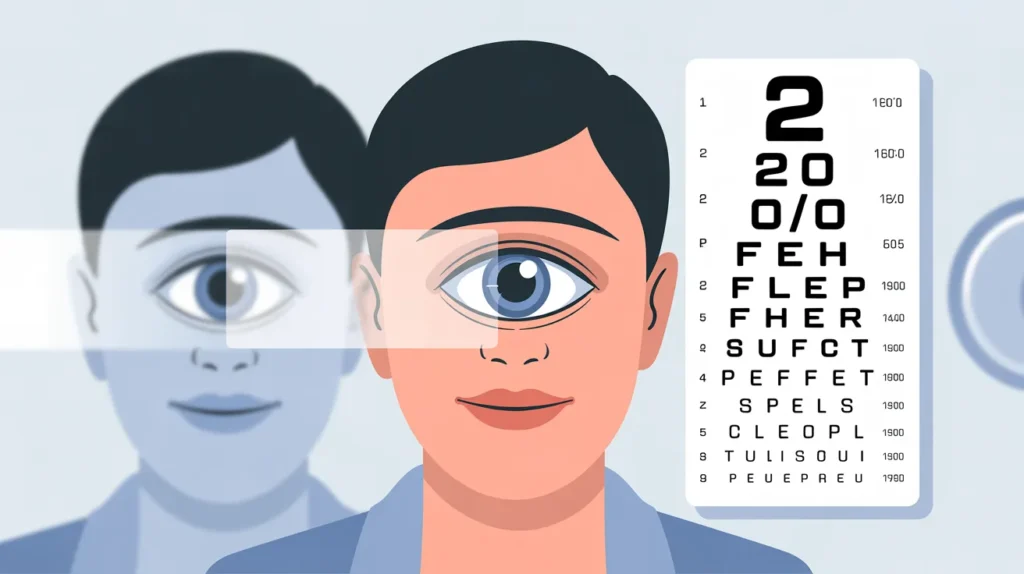
20/20 vision is a term used to describe normal visual acuity. Visual acuity measures how clearly a person sees at a specific distance compared to the average standard.
Core Meanings:
- Medical Definition:
- 20/20 means seeing clearly at 20 feet what an average person sees at 20 feet.
- If your vision is worse, like 20/40, you must be at 20 feet to see what a person with normal vision sees at 40 feet.
- Metaphorical Meaning:
- “20/20 vision” also refers to mental clarity, foresight, or perfect understanding.
- Example: “After talking to her mentor, I finally had 20/20 vision about my career path.”
- In Slang or Casual Speech:
- Used humorously or figuratively to describe hindsight.
- Example: “Hindsight is 20/20”—meaning things are clear after they’ve happened.
Quick Examples in Quotes:
- Medical: “My eye doctor said I have 20/20 vision in both eyes.”
- Figurative: “She gave me advice, and suddenly everything felt like 20/20 vision.”
Historical & Cultural Background
The concept of measuring vision has ancient roots. Civilizations like the Egyptians and Greeks studied the eye, noting that clarity and perception were essential for survival and art.
- Western Culture: The term “20/20” originated in the Snellen chart, created in the 1860s by Dr. Herman Snellen in the Netherlands. It became the standard for testing visual acuity worldwide.
- Asian Culture: Vision has long been associated with wisdom and foresight in Chinese and Japanese traditions. Clear eyesight often symbolized a clear mind.
- Indigenous Interpretations: Many Indigenous communities view vision as both literal and spiritual—seeing clearly can reflect insight into nature or one’s path in life.
Understanding this history gives 20/20 vision both scientific and cultural weight, showing why it resonates beyond medicine.
Emotional & Psychological Meaning
20/20 vision isn’t just about eyes—it has a psychological and emotional dimension:
- Personal Growth: Achieving “20/20 clarity” symbolizes understanding oneself or a situation fully.
- Identity: Clarity of thought can help define personal identity and decision-making.
- Healing & Mindset: Many people associate “seeing clearly” with letting go of confusion, doubt, or anxiety.
Example: “After journaling for months, I finally had 20/20 vision about what I truly want in life.”
Different Contexts & Use Cases
1. Personal Life
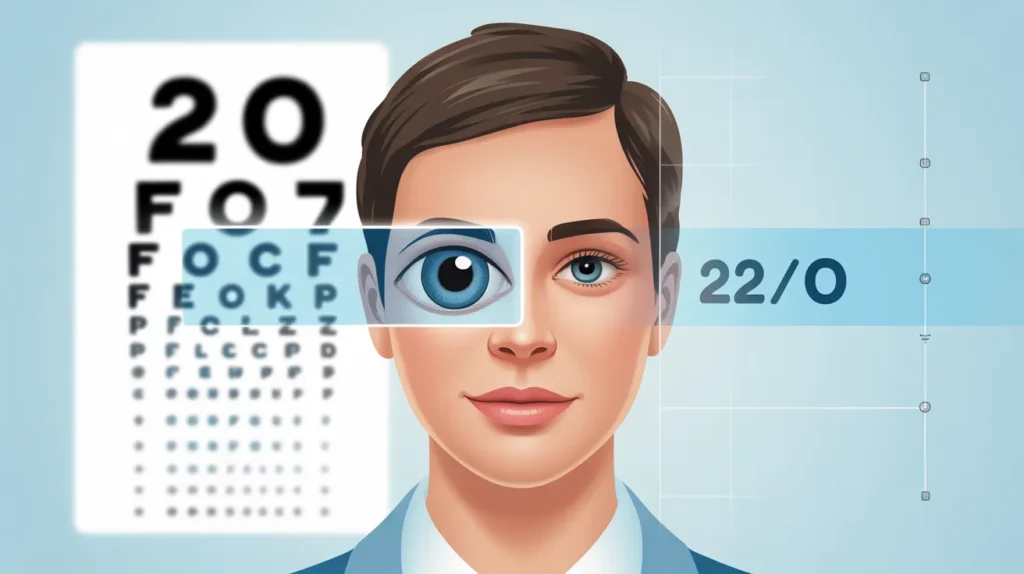
- Literal: Eye exams, optometrists, and glasses prescriptions.
- Figurative: Making decisions, gaining perspective, understanding relationships.
2. Social Media
- Hashtags like #2020vision or #PerfectSight are often used metaphorically.
- Posts about clarity, goals, or insights frequently use it.
3. Relationships
- Understanding emotions, intentions, and communication clearly is often called having “20/20 vision.”
- Example: “After we talked honestly, I finally had 20/20 vision about our relationship.”
4. Professional / Modern Usage
- Used in business for strategy clarity.
- Example: “We need 20/20 vision on our quarterly goals to avoid mistakes.”
Hidden, Sensitive, or Misunderstood Meanings
People often misinterpret 20/20 vision:
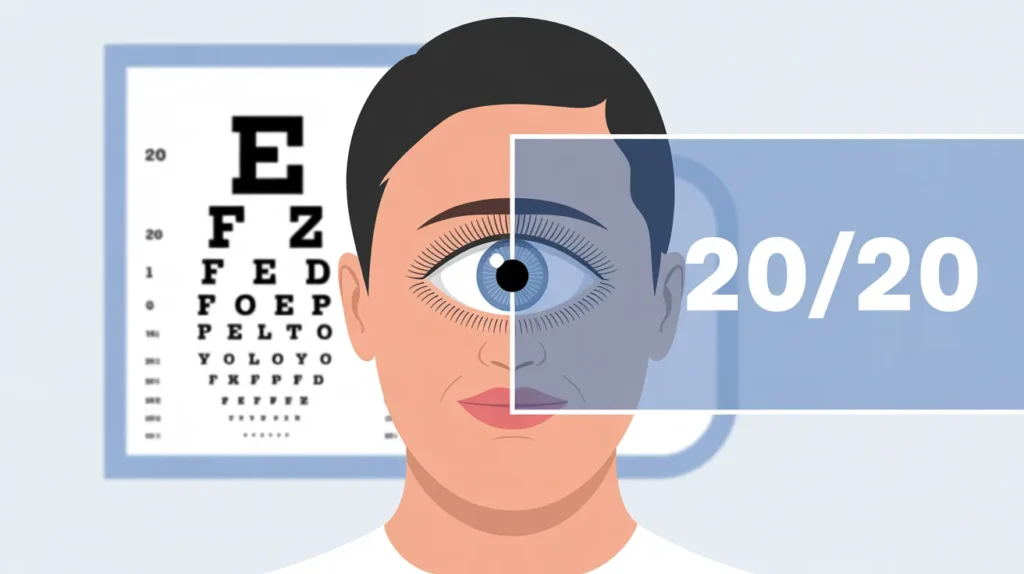
- Assuming 20/20 Means Perfect Eyesight
- It measures clarity at distance only, not peripheral vision, color perception, or depth.
- Hindsight Confusion
- The phrase “Hindsight is 20/20” sometimes makes people think it’s literal, but it’s metaphorical—clarity comes after events occur.
- Cultural Misinterpretations
- Not all cultures interpret clarity or insight as linked to literal vision. Some emphasize intuition or spiritual sight instead.
Comparison Table: 20/20 Vision vs Similar Concepts
| Term/Concept | Meaning | Key Insight |
|---|---|---|
| 20/20 Vision (Medical) | Standard visual clarity at 20 feet | Baseline for normal eyesight |
| 20/20 Vision (Metaphoric) | Perfect understanding, hindsight, or insight | Not literal; about clarity of thought |
| Eagle Eye | Acute, detailed perception | Focused on spotting small details |
| Nearsighted / Farsighted | Difficulty seeing at distance or close up | Visual limitations, opposite of clarity |
| Blindspot | Area you can’t see physically or figuratively | Recognizes limits in perception |
Key Insight: 20/20 vision blends objective measurement with subjective understanding, making it unique as both medical and metaphorical language.
Popular Types / Variations
- 20/15 Vision – Better than average clarity; sees at 20 feet what most see at 15.
- 20/40 Vision – Below standard; needs corrective lenses.
- Perfect Vision – Common phrase for 20/20 in casual speech.
- Eagle-Eye Vision – Sharp focus and detail awareness.
- Hindsight 20/20 – Understanding events clearly after they occur.
- Night Vision 20/20 – Figuratively seeing through darkness or challenges.
- Digital 20/20 – Used online for seeing trends or insights clearly.
- Crystal-Clear Vision – Emphasizes transparency and understanding.
- Mind’s Eye 20/20 – Visualization or imagination clarity.
- Strategic 20/20 – Business or planning foresight.
How to Respond When Someone Asks About It
Casual Responses:
- “It means my eyes are normal—nothing fancy.”
- “I can see clearly at a standard distance.”
Meaningful Responses:
- “It’s like having clarity in both vision and understanding.”
- “It’s about seeing what’s really there, literally or figuratively.”
Fun Responses:
- “20/20 vision means I can spot your snack from across the room!”
- “I see everything… sometimes too much.”
Private Responses:
- “It’s standard eyesight, nothing to worry about.”
- “It’s more than eyesight—it’s clarity in life too.”
Regional & Cultural Differences
- Western: Strong focus on medical definition and metaphors about hindsight.
- Asian: Vision often linked to wisdom and foresight.
- Middle Eastern: Clarity of vision tied to spiritual insight and decision-making.
- African / Latin: Vision symbolism often connected to guidance, future planning, or survival skills.
FAQs
1. Is 20/20 vision perfect eyesight?
- Not necessarily. It measures distance clarity, not color or peripheral vision.
2. Can 20/20 vision change over time?
- Yes. Age, eye health, and conditions like myopia can affect it.
3. What does “Hindsight is 20/20” mean?
- Things are clearer after they happen; hindsight gives full understanding.
4. Can someone have 20/15 vision?
- Yes. That’s sharper than average eyesight.
5. Does 20/20 vision require glasses?
- Not if your natural vision is already 20/20, but corrective lenses help those below standard.
6. Is 20/20 vision the same worldwide?
- The standard is based on the Snellen chart but slight variations exist by country.
7. Can lifestyle affect 20/20 vision?
- Yes. Nutrition, screen time, and regular checkups impact eye clarity.
Conclusion
20/20 vision is more than a medical standard—it’s a symbol of clarity, insight, and understanding. From literal eyesight to life lessons and hindsight, the phrase connects health, culture, and psychology.
Whether you’re talking about eyes, decisions, or personal growth, understanding 20/20 vision helps you see clearly in every sense of the word. Embrace it literally and figuratively, and you might notice life becoming a little clearer too.
See also: [Hindsight 20/20 Meaning]