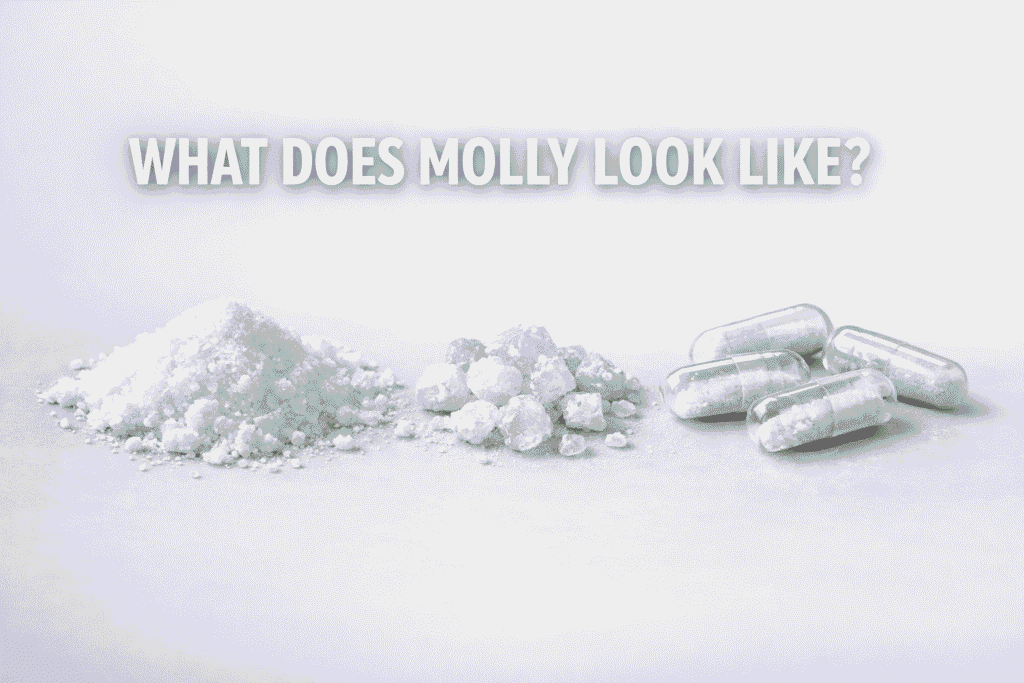
“What does molly look like?” is a question many people search online—often out of curiosity, safety concerns, or confusion about slang.
The word molly can mean different things depending on context. Most commonly, it refers to a street name for a synthetic drug related to MDMA. But it can also be a person’s name or slang in social settings.
Understanding what molly looks like—physically and culturally—can help you stay informed, avoid misinformation, and make safer choices.
Definition & Core Meaning
The word molly has multiple meanings, but the most searched definition refers to a recreational drug.
1️⃣ Molly (Drug Slang)
“Molly” is a street name for supposedly pure MDMA (3,4-methylenedioxymethamphetamine), the main psychoactive ingredient in ecstasy.
It typically appears as:
- White or off-white crystalline powder
- Small clear or colored capsules
- Crushed rock-like crystals
- Sometimes pressed into tablets (though those are more often called ecstasy)
Example:
- “He said it was molly, not ecstasy.”
- “The powder in the capsule was supposed to be molly.”
2️⃣ Molly as a Name
Molly is also a common English female name, often a short form of Mary.
Example:
- “Molly is coming over tonight.”
3️⃣ Slang Usage
In pop culture and music, “molly” often symbolizes partying, nightlife, and rave culture.
Example:
- “The club was wild—everyone was on molly.”
Historical & Cultural Background
Understanding molly requires looking at both chemistry and culture.
Origins of MDMA
MDMA was first synthesized in 1912 by the German pharmaceutical company Merck Group.
It was not widely used until the 1970s, when therapists experimented with it for emotional openness and trauma therapy. Later, it became popular in rave scenes during the 1980s and 1990s.
Rise in Club Culture
In Western nightlife culture:
- Molly became associated with EDM festivals.
- It was marketed as “pure” compared to ecstasy.
- Music artists referenced it in lyrics.
Global Spread
- Western countries: Linked to festivals and electronic music.
- Asian cities: Underground party scenes.
- Latin America: Club and tourism environments.
- Middle Eastern regions: Highly restricted and illegal, often misunderstood.
The name “molly” gained popularity because it suggested purity—though in reality, many samples are adulterated.
Emotional & Psychological Meaning
For many users, molly is associated with:
- Emotional openness
- Increased empathy
- Heightened sensory perception
- Temporary euphoria
However, the psychological effects vary widely depending on:
- Dosage
- Substance purity
- Environment
- Mental health condition
Some report:
- “I felt deeply connected to everyone.”
- “Music sounded more intense.”
Others experience:
- Anxiety
- Dehydration
- Emotional crash afterward
This emotional rollercoaster is why the substance is controversial.
Different Contexts & Use Cases
1. Personal Life
Someone may ask:
- “What does molly look like?” out of concern for a family member.
Parents often research it to identify warning signs.
2. Social Media
Hashtags like:
- #Molly
- #FestivalLife
- #Rolling
Often glamorize it.
But social media rarely shows the risks.
3. Relationships
In dating or party conversations:
- “Do you roll?” means “Do you use molly?”
It can influence social bonding, but also create risky environments.
4. Professional / Legal Context
Molly (MDMA) is classified as a Schedule I substance in the United States and illegal in many countries.
However, clinical trials are being conducted under strict regulation.
MAPS has researched MDMA-assisted therapy for PTSD.
Hidden, Sensitive, or Misunderstood Meanings
Myth 1: Molly Is Always Pure
Reality: Many street samples contain:
- Synthetic cathinones (“bath salts”)
- Methamphetamine
- Fentanyl contamination (rare but reported)
Myth 2: Molly Is Safer Than Ecstasy
Not necessarily. The form doesn’t guarantee purity.
Myth 3: It’s Not Addictive
While MDMA is not considered highly addictive physically, psychological dependence can develop.
Comparison Section
| Term | Appearance | Meaning | Risk Level |
|---|---|---|---|
| Molly | Powder or capsules | Supposed pure MDMA | High (due to unknown purity) |
| Ecstasy | Pressed tablets | MDMA mixed with other substances | High |
| LSD | Small blotter paper squares | Hallucinogen | Moderate–High |
| Cocaine | White powder | Stimulant | High |
Key Insight
The biggest difference isn’t just appearance—it’s unpredictability. Street substances often differ from what buyers expect.
Popular Types / Variations (8–10)
While chemically similar, street variations differ in form and nickname.
1️⃣ Crystal Molly – Rock-like crystals, crushed into powder.
2️⃣ Capsule Molly – Powder inside gelatin capsules.
3️⃣ Pressed Molly – Tablet form (often actually ecstasy).
4️⃣ Pink Molly – Colored powder (often mixed).
5️⃣ Blue Molly – Dyed version for branding.
6️⃣ Powder MDMA – Loose crystalline substance.
7️⃣ “Rolling” – Slang for being under its effects.
8️⃣ “Scooby Snacks” – Party slang reference.
9️⃣ Festival Molly – Sold at music events.
🔟 “Molly Water” – Dissolved form in drinks (very dangerous due to dosing unpredictability).
How to Respond When Someone Asks About It
Casual Response
- “It usually looks like white powder or crystals.”
- “It’s often sold in capsules.”
Meaningful Response
- “It’s usually white crystalline powder, but street drugs can be mixed with other substances.”
Fun Response (Non-Encouraging)
- “It’s not as glamorous as social media makes it look.”
Private Response
- “If you’re asking because you’re concerned, let’s talk openly.”
Regional & Cultural Differences
Western Countries
Strong link to rave culture, EDM festivals, and nightlife.
Asian Regions
More discreet underground party scenes.
Middle Eastern Countries
Strict legal penalties. Discussion is often taboo.
African & Latin Contexts
Urban nightlife presence but varying legality and social acceptance.
Health & Safety Awareness
Visual identification alone cannot confirm substance purity.
Common signs someone may have taken molly:
- Dilated pupils
- Excessive sweating
- Jaw clenching
- Dehydration
- Elevated heart rate
However, these signs overlap with other substances.
Testing kits exist in some countries to detect MDMA content.
FAQs
1. What color is molly usually?
Most commonly white or off-white, but it can appear in various colors due to additives.
2. Is molly always powder?
No. It may appear as crystals, powder, or inside capsules.
3. Is molly the same as ecstasy?
Molly is marketed as pure MDMA, while ecstasy is usually pressed tablets containing MDMA plus other substances.
4. Can you tell if molly is pure by looking at it?
No. Appearance does not confirm purity.
5. Why do people call it “rolling”?
“Rolling” describes the euphoric wave-like sensation users report.
6. Is molly legal?
In most countries, it is illegal outside approved research settings.
7. Why do people think molly is safer?
Because it’s marketed as “pure,” but this assumption is often incorrect.
Conclusion
Molly typically looks like white crystalline powder, crushed crystals, or capsules. But its appearance tells only part of the story.
Behind the name lies a complex mix of chemistry, culture, emotion, and risk.
Whether you’re researching out of curiosity, safety, or awareness, understanding what molly looks like—and what it truly represents—helps you separate myth from reality.
Knowledge is always more powerful than assumptions.